 New Research Sheds Light on a Possible Neurological Cause of Hyperhidrosis
Why does primary hyperhidrosis (Hh) strike nearly 5% of people, while the other 95% are lucky enough to just sweat “normally”?
Why do some treatments work wonders for certain people, but have little impact on others?
New research has some answers and provides more evidence that:
--Primary, idiopathic hyperhidrosis may be influenced by genetics and differences in the nervous system. (So not your fault.)
--Whether you have a certain type of Hh (or not) can determine whether some treatments work for you (or not).
After 10 years of research, an international team of scientists from Johns Hopkins University, USA; Ghent University, Belgium; the Institute of Science, Japan; and the University of British Columbia, Canada, have identified a genetic factor that can contribute to primary hyperhidrosis (excessive sweating).
The findings provide some of the strongest evdience to date that in some people with primary hyperhidrosis, there is a genetic difference that overactivates the nerves that control sweating. In this type of Hh, the problem is not with the sweat glands themselves but rather with the nerves that stimulate them. This could be why treatments that focus on sweat glands (like injections and iontophoresis) don't work or don't work enough for certain people.
The results were recently published in Science Advances and focus on variants to a gene called SCN10A.
When the nerves turn up the "volume" on sweating
The SCN10A gene provides instructions for making a protein called NaV1.8, which is a type of sodium channel. Sodium channels help nerve cells send electrical signals. The research shows that rare changes in the SCN10A gene can cause nerves to be overactive; a little like turning up the volume on the signals outside the brain and spinal cord that stimulate sweating.
Senior author Malcolm Brock, M.D., Professor of Surgery at the Johns Hopkins University School of Medicine, explained:
"Our findings show that, for some patients, the problem actually begins in the nerves that control sweating, providing a biological explanation for the condition and a potential pathway to more effective treatments."
As part of the study, scientists analyzed the DNA of more than 180 people from 32 families with a multi-generational history of primary sweat disorders (sweating problems with no known cause) that did not respond adequately to localized treatments (like antiperspirants, injections, or iontophoresis). They found that nearly 1 in 5 or 20% of the affected families carried rare variants in the SCN10A gene (versus, according to some sources, 0.5% to 1% frequency of the variants in the general population).
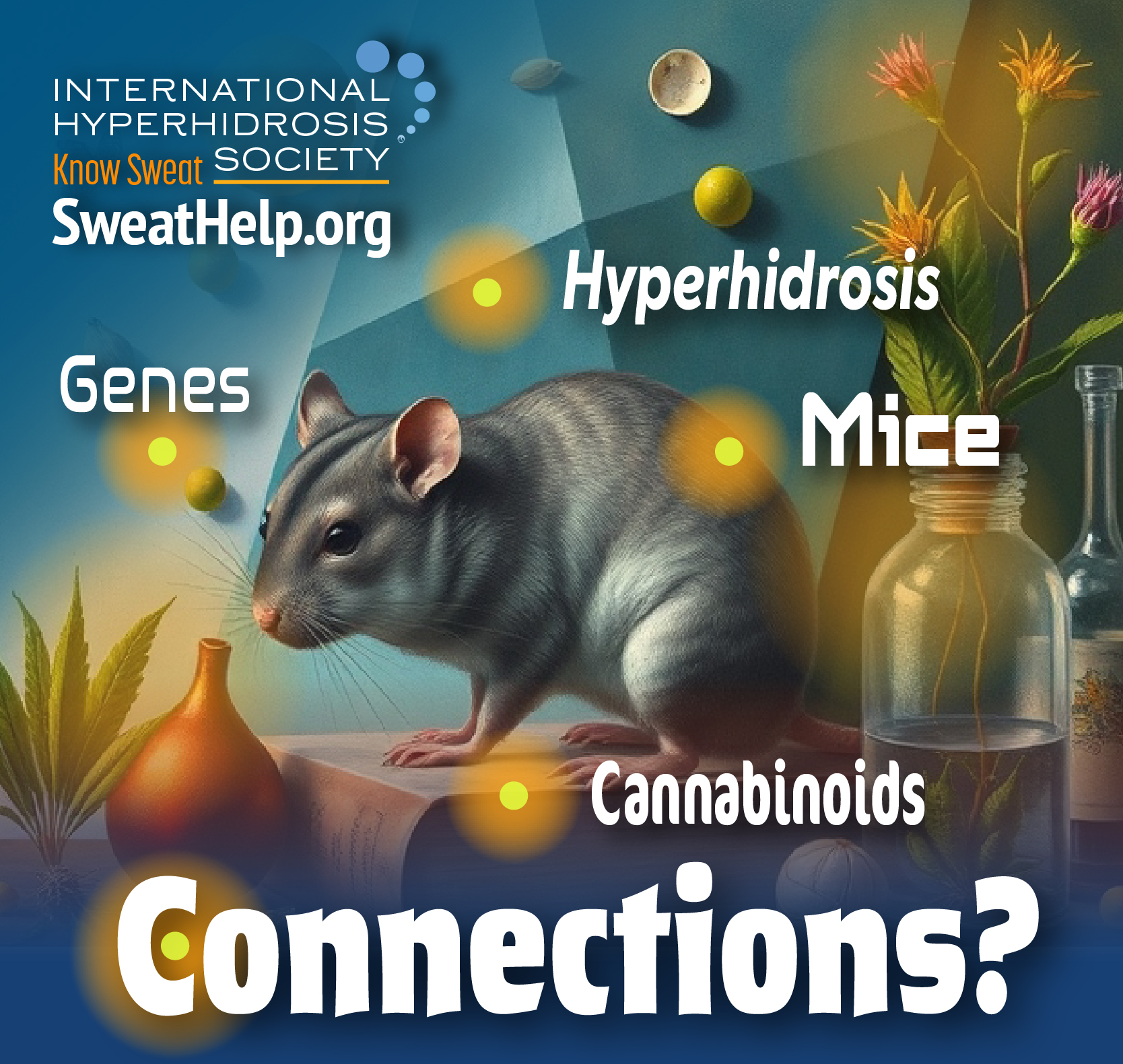
The researchers then engineered mice to carry one of the SCN10A variants. The mice developed excessive sweating on their feet (the only place where mice can sweat), providing additional evidence that the genetic change can contribute to excessive sweating.
Further experiments showed that NaV1.8 is present in sympathetic nerve cells, which are part of the nervous system involved in automatically controlling functions such as sweating. The SCN10A variant increased the activity of these nerve cells.
The researchers also found that they could significantly reduce sweating in mice with the SCN10A variant by using drugs that inhibit sodium-channel activity (including glycopyrrolate, oxybutynin, and guanfacine.)
Not everyone with hyperhidrosis has the same cause
But, not everyone with hyperhidrosis has an SCN10A variant.
Primary hyperhidrosis can have different underlying causes. In some people, the problem may involve the sweat glands themselves (alteration in sweat gland structure or function). In others, the nerves controlling those glands may play a larger role. And in still others, more than one biological mechanism may be involved (such as a combination of the above, or perhaps underlying mechanisms that are not yet understood).
Understanding which pathways are involved in an individual Hh patient could, in the future, help healthcare providers better personalize treatment.
It may also help explain why some people do not get the relief they expect from treatments that primarily target the sweat glands.
What could this mean for treatment?
It's important to be cautious as we think about implications for treatment from this research.
Yes, the researchers reported that approaches targeting NaV1.8 sodium channels (including guanfacine, oxybutynin, and certain cannabinoids) showed effectiveness in their mouse model. The cannabinoid finding may get particular attention as some people have reported to us that their sweating changes when using cannabis products.
However, this does not mean that cannabinoids should be considered standard treatments for primary hyperhidrosis.
This research included treatment studies in mice, not clinical trials in people. Mice and humans can respond very differently to medications and other compounds. Still, the findings provide a scientific rationale for further investigation and, potentially, controlled clinical trials in humans.
A key takeaway from the study is that primary Hh may have multiple underlying causes—and sometimes more than one may be involved in the same person.
As the researchers noted, "combination or pathway-targeted approaches may ultimately prove more effective than single-agent therapy." Which means that, depending on the underlying mechanisms involved, some people may benefit most from treatments that target the sweat glands, such as iontophoresis, botulinum toxin injections, miraDry, or topical anticholinergics (like Sofdra and Qbrexza). For others, as the International Hyperhidrosis Society has long emphasized, combinations of treatments can often be the most effective, such as oral anticholinergics combined with localized, non-anticholinergic treatments, as mentioned above. And for still others, perhaps new treatments hopefully developed in the future could be best.
The ultimate goal is more personalized treatment: understanding why a particular person's sweating is occurring and then choosing treatment accordingly.
What happens next?
There is still much to learn.
In particular, researchers need to determine how well these findings in mice translate to humans and how SCN10A variant-related hyperhidrosis fits into the broader picture of the autonomic nervous system, which controls many of the body's automatic functions, including sweating, heart rate, blood pressure, and digestion.
Still, the research represents an important step forward. The more we understand why hyperhidrosis happens, the closer we can get to treatments that are better targeted, more effective, and more personalized for the people who need them.
Stay tuned as research continues to uncover the complex biology behind hyperhidrosis.
Want to continue receiving this sort of hyperhidrosis news and analysis, written and researched by thoughtful, informed people? Support the work of the IHhS by making a donation today.